Pet Insurance: Is It Worth It? A Decision Guide
Pet insurance can turn a devastating vet bill into a manageable one, but it pays off only for some pets and some budgets: the decision turns on age, health, savings, and what the policy actually covers.
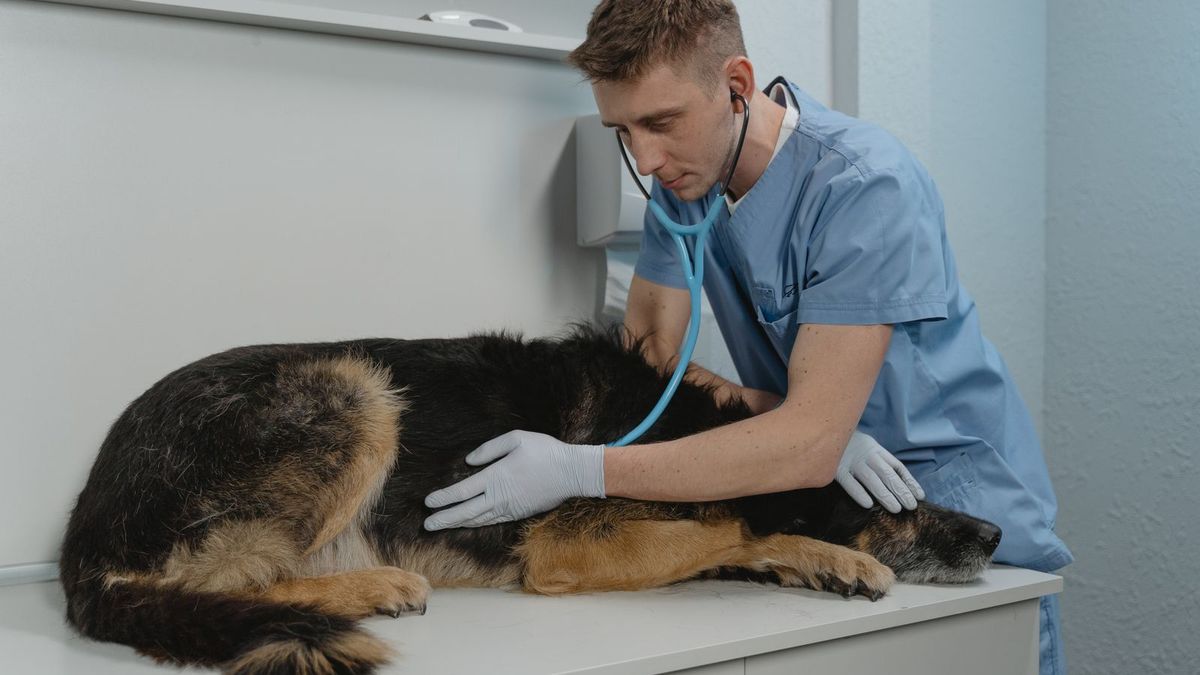
It usually starts at an inconvenient hour. A dog comes home from the park limping, or a cat stops eating on a Saturday night, and within a few hours an owner is standing in an emergency clinic hearing a treatment estimate with four figures in it. In that moment, the question is never whether the pet deserves care. It is whether the money is there. Pet insurance answers that question in advance, exchanging a steady monthly premium for help with bills that cannot be predicted. Sorting out whether it suits a household is a job for before the emergency, not during it.
The short answer: two profiles
Coverage tends to earn its keep in three situations. The first is a young, healthy animal, when premiums are lowest and the policy has the most years ahead of it. The second is a household without the savings to absorb a major bill, where insurance decides whether treatment goes ahead at all; in the gravest cases it can decide whether a pet receives care at all. The third is the owner who wants medical choices kept separate from money worries, and who values that separation even if no claim is ever made.
Coverage tends to disappoint in the mirror-image situations. An older animal, or one already managing chronic illness, brings high premiums and wide exclusions, with much of its care falling outside the policy. A household with deep savings may prefer to pay vet bills directly and keep the premiums. An owner happy to carry the risk of one large diagnosis may reasonably decline. None of these is a wrong answer, provided it is chosen deliberately.
How a claim actually pays out
Most policies turn on three numbers. The yearly deductible is the sum the owner covers before the insurer pays anything. Once it is met, the insurer refunds a share of the remaining bill, most often 70, 80, or 90 percent. Many plans also set a yearly ceiling on total refunds. Consider a $2,000 operation on a plan with a $500 deductible and 80 percent reimbursement. Deductible first: $2,000 minus $500 leaves $1,500, and 80 percent of that is $1,200 back, so the owner keeps $800 of the bill. Reimbursement first: 80 percent of $2,000 is $1,600, minus the $500 deductible, leaving $1,100 back and $900 with the owner. Whichever order the insurer uses, several hundred dollars stay with the owner on top of premiums already paid, and most insurers expect the clinic bill to be settled first, with a claim filed for the refund, though a few pay the clinic directly. Asking which order a policy uses is a question for before purchase, not after the first claim.
Vet spending splits into two very different kinds. The American Pet Products Association's 2025 survey figures, reported by NerdWallet, put average yearly spending on surgical visits at $505 for dog owners and $338 for cat owners, and emergency visits at $451 and $343 respectively. The most frequent claims mix the cheap and the costly: skin allergies, digestive trouble, ear infections, and arthritis lead the lists, beside trauma in dogs and kidney failure, dental disease, and diabetes in cats. Minor problems may never clear the deductible. Major ones can run to thousands. Insurance is a wager placed on the major end of that range.
What it costs, and the age climb
North American Pet Health Insurance Association data for 2025, reported by NerdWallet, puts the typical yearly premium for a combined accident-and-illness policy at about $836 for dogs and $435 for cats, near $70 a month for a dog and $36 for a cat. Adding a wellness rider for routine care lifts the averages to roughly $1,414 a year for dogs and $859 for cats. Injury-only cover, which ignores sickness entirely, runs far lower, near $190 a year for dogs and $112 for cats. Quotes move with age, breed, local vet prices, and plan; confirm present pricing on the insurer's official site.
The pattern that catches owners out is the rise with age. NerdWallet sampled quotes from one insurer, Pets Best, for a medium mixed-breed dog in a single Texas ZIP code, on a plan capped at $5,000 a year with a $250 deductible and 80 percent reimbursement. The monthly quote moved from about $35 at three months old to about $71 at eight years and about $157 at twelve. A domestic shorthair cat in the same area moved from about $22 a month as a kitten to about $107 at fourteen. One company cannot price every pet, but the upward shape holds broadly. Buyers should budget for that slope: abandoning a policy late surrenders protection when it matters most.
What is covered, what is not, and the waiting game
Standard policies focus on surprises. Hospital stays, operations, prescribed medicines, and diagnostic testing are usually included, and many plans extend to chemotherapy, rehabilitation, and acupuncture. Predictable care sits elsewhere: neutering, vaccinations, yearly checkups, and dental cleaning are generally left out unless a wellness add-on is bought. An owner whose vet spending is mostly scheduled prevention will see little return from a basic plan.
The broadest carve-out in almost every plan concerns illness or injury already present when cover starts. New problems arising after the start date are generally eligible; anything predating it generally is not, which is why arranging cover after a diagnosis rarely helps. Some insurers treat short-lived ailments differently from lasting ones: a passing infection might regain eligibility after a stretch free of signs and treatment, whereas an ongoing condition such as allergies usually stays outside cover. Waiting windows also apply: sickness cover often begins about a fortnight after the start date, injury cover sooner. Cover arranged the day trouble appears will not rescue that episode.
Alternatives and a comparison checklist
The leading alternative is to self-fund: route the equivalent of a premium into a high-yield savings account reserved for vet costs. The money remains free for any use if the pet stays healthy, but a puppy needing costly surgery three months after arrival will have only three months of deposits behind it. Without insurance or savings, a clinic may accept installments, another practice may charge less, and borrowing products such as a CareCredit card or a Scratch loan can spread the cost.
Buyers should compare beyond the monthly premium: how prior conditions are defined and whether short-lived ailments can regain eligibility, the deductible, refund share, yearly cap, and the order in which they apply, the length of the waiting windows, whether the insurer settles directly with the clinic, and how steeply premiums have risen with age. Collect quotes from several insurers on identical cover for the same animal, read the sample policy rather than the sales summary, and get the answers in writing. Close to 7 million American dogs and cats were covered in 2025, up nearly 9 percent on the year before according to NAPHIA, still a small fraction of the roughly 71 million dog-owning and 53 million cat-owning households in the APPA's 2025 survey. Pet insurance turns rare, large bills into a regular cost. It is worth it when it fits the animal in front of you.